
How to Search Sacramento County Court Records
The main search tool for Sacramento County court records is the Sacramento Superior Court Public Case Access portal at services.saccourt.ca.gov/PublicCaseAccess. The portal is free. It splits cases by type. Civil, criminal, family, probate, small claims, and traffic each have their own search page. A search starts with the case type. Then you pick case number or party name. A case number search is cleaner because names can be misspelled, abbreviated, redacted, or changed.
Before you begin, gather the case number if you have it. If you do not, write down the full legal name, any aliases, and an approximate filing date. For criminal searches the portal may ask for a date of birth to cut down on common-name results. Keep a note pad open for the case number you find. You will need it for any later copy request.
The search walk-through below covers the basics.
- Open the Public Case Access landing page at services.saccourt.ca.gov/PublicCaseAccess and pick the case type.
- Choose case-number search or name search on the tab or radio control.
- Type the case number in the exact format, or enter the last name first and add a first name only after a broad result list is too long.
- Narrow the search by filing-date range or, on the criminal tab, by date of birth where the form asks for it.
- Review the result row for court, case number, parties, filing date, case type, and status.
- Click the case number link to open the docket, hearings, parties, attorneys, and any viewable filings.
- If you need a paper copy or a certified copy, note the case number and ask the Sacramento Superior Court Clerk's Office for the right copy form and fee.
The Sacramento Superior Court Public Case Access portal sits at the center of court record searches in Sacramento County. The civil portal page (services.saccourt.ca.gov/PublicCaseAccess/Civil) shows how the portal is built around case type tabs.
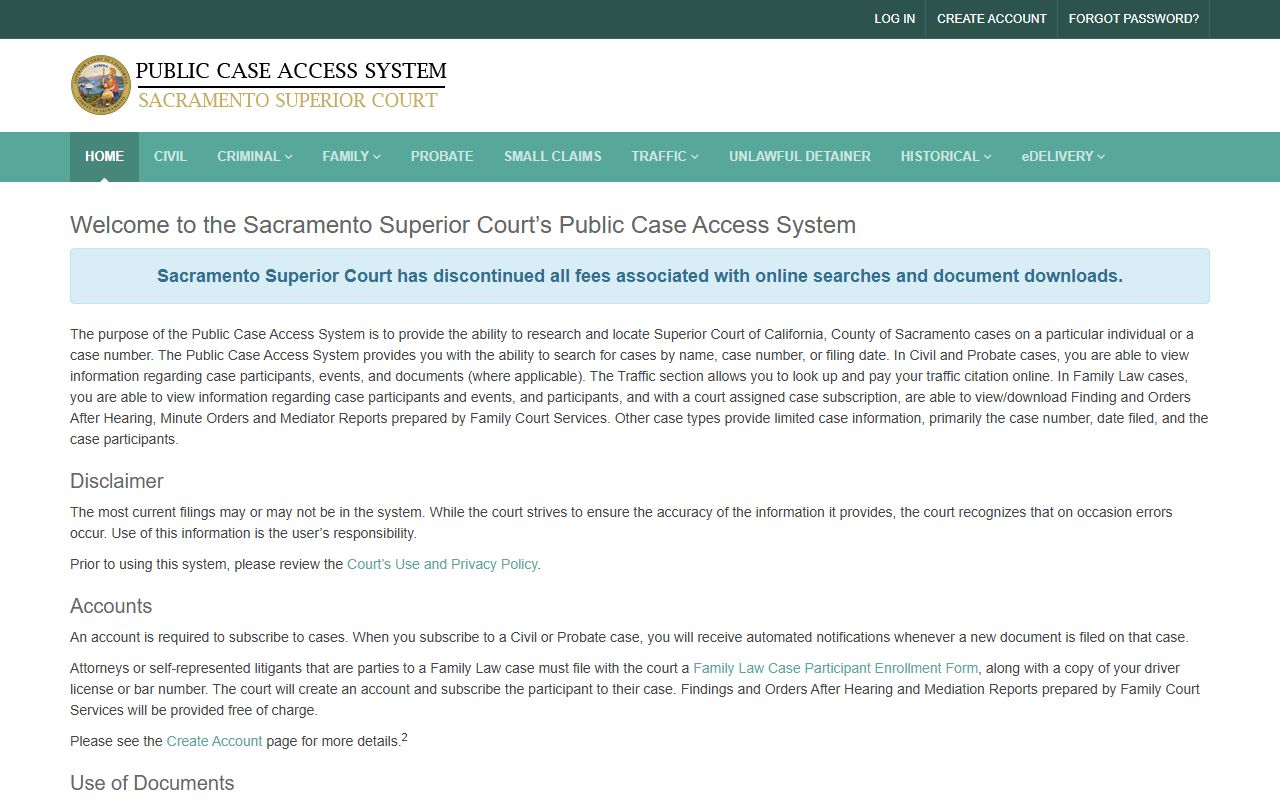
The landing page sets the case category and the search type. Each tab then opens the right form for that case kind.
Sacramento County Court Records Search Fields
Public Case Access uses a small set of common fields across case types. The civil, family, and probate tabs share most of the same fields. The criminal tab adds a date-of-birth field to help sort common names. Each field has its own format and use. The table below lists the common public fields drawn from the Sacramento Superior Court portal.
| Field Label | Type | Required | Notes / Format |
|---|---|---|---|
| Case Number | Text | No | Best field when known. Format varies by case type and year. |
| Last Name / Business Name | Text | Conditional | Exact spelling helps. Use both legal and prior names. |
| First Name | Text | No | Narrows person search results. |
| Middle Name / Initial | Text | No | Use for common surnames. |
| Date of Birth | Date | Sometimes (criminal) | MM/DD/YYYY. Used on criminal search to cut false matches. |
| Filing Date From / To | Date range | No | Narrow by file date when you know it. |
| Case Type | Dropdown | No | Civil, family, probate, small claims, criminal, traffic. |
| Search Type | Tab / Radio | Yes | Case number search or name search. |
| Search | Button | n/a | Runs the query. |
| Reset / Clear | Button | n/a | Clears the form to start a new query. |
The civil search at services.saccourt.ca.gov/PublicCaseAccess/Civil works the same way as the rest of the portal, with case-type filters for unlimited civil, limited civil, small claims, unlawful detainer, and civil harassment matters.
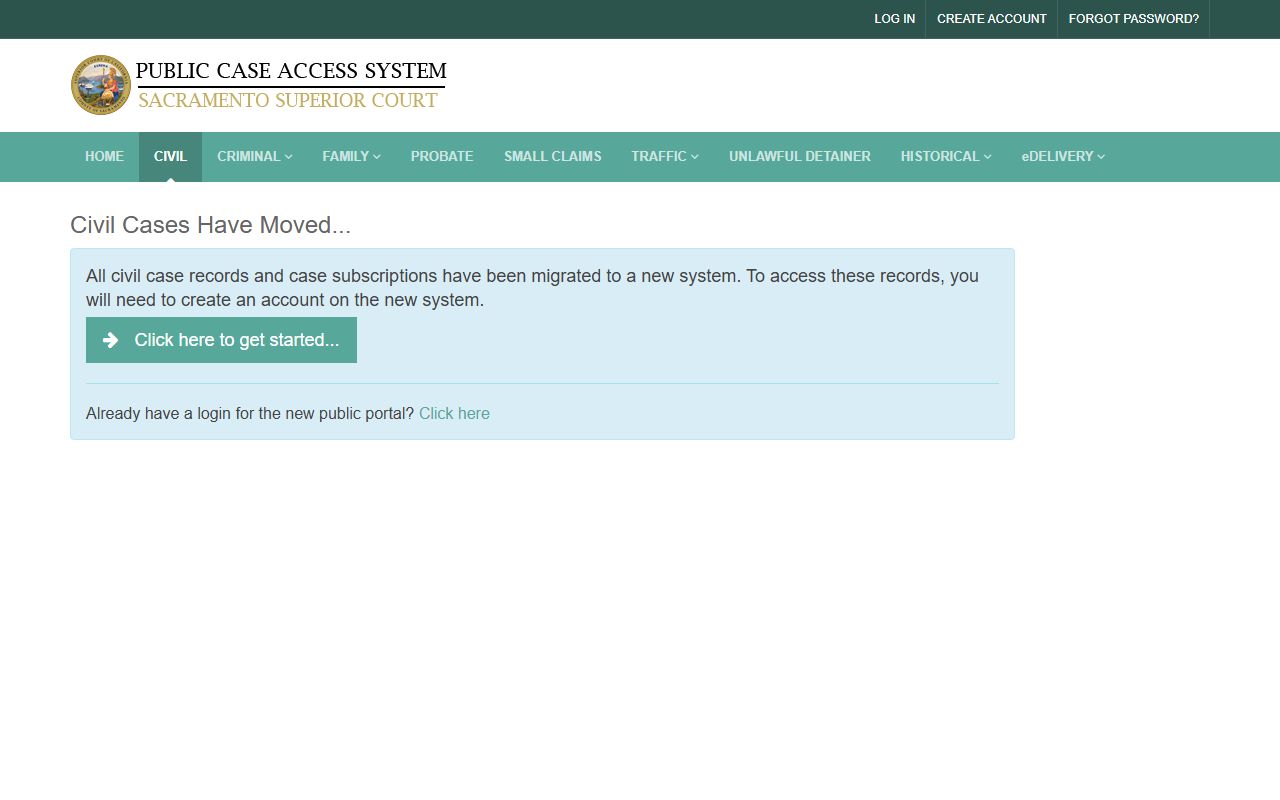
The civil tab shares the same field set, but the case-type filter changes to fit civil work.
Civil, Criminal, Family, and Probate Coverage
Sacramento Superior Court is a unified trial court. Civil, criminal, family, probate, traffic, juvenile, small claims, and mental health matters all fall under the same court system. The records, though, are split by division. The kind of case you have controls which tab to use and which courthouse to visit.
Public access ranges from full case detail to no public detail at all. Juvenile and adoption files are confidential. Family law files have public docket entries but redacted financial and child-related material. Civil and probate files are mostly public, but sealed orders limit access.
- Civil records. Filed at the Sacramento civil division. Includes complaints, answers, motions, judgments, writs, and dismissals.
- Criminal records. Filed at the criminal division. Includes complaints, indictments, arraignment minutes, plea forms, warrants, sentencing minutes, and probation orders.
- Family law records. Filed at the William R. Ridgeway Family Relations Courthouse. Includes divorce, custody, support, parentage, and domestic violence restraining orders.
- Probate records. Filed at the probate division. Includes estate petitions, wills admitted to probate, letters, accountings, and conservatorship papers. See Sacramento probate records for detail.
- Traffic records. Filed at the Carol Miller Justice Center and the traffic division. See Sacramento traffic court records for citations and payment options.
- Small claims records. Filed at the small claims division for low-dollar civil disputes by self-represented parties.
What a Sacramento County Court Record Shows
A Sacramento County court record is a file built up over the life of a case. The docket lists each filing and event. A case detail page shows parties, attorneys, hearings, and the case status. Some filings link to images you can read online. Others are noted only as docket entries. The chart below maps the common fields you will see in a public detail view from Sacramento Superior Court.
| Field | What It Shows |
|---|---|
| Case Number | Unique court identifier. Format varies by division and year. |
| Case Title | Party names. People v. Defendant, Plaintiff v. Defendant, Marriage of, Estate of. |
| Filing Date | Date the court opened the case. |
| Case Type | Civil, criminal, family, probate, small claims, traffic. |
| Status | Active, pending, disposed, dismissed, judgment, closed, stayed, sealed. |
| Court Location / Department | Courthouse and department or courtroom number. |
| Judicial Officer | Judge, commissioner, or temporary judge assigned. |
| Parties | Plaintiff, defendant, petitioner, respondent, decedent, conservator, guardian. |
| Attorneys | Attorney name and represented party where public. |
| Docket / Register of Actions | Chronological list of filings, hearings, and orders. |
| Hearings | Date, time, department, event type, and result. |
| Charges (criminal) | Charge description, code section, count, level, plea, verdict, sentence. |
| Financial Fields | Filing fees, fines, restitution, bail or bond entries. |
| Redactions | SSN, account numbers, medical records, minors, victim data, sealed filings. |
A case can show many fields and still hold back source documents. Public detail does not always mean a downloadable image. If you need the filed paper or a stamped copy, request it from the Superior Court Clerk's Office at the right division.
Public Access Framework for Sacramento Court Records
Public access to Sacramento court records follows California law and court rules. The California Public Records Act, now at Government Code section 7920.000 and the sections that follow, makes most state and local agency records open. It applies to county agencies like the Sheriff and Clerk/Recorder. Court case files, though, are not agency records. They follow court access rules.
The California Rules of Court control public access to court case files. Rule 2.400 lays out the framework for public access to trial court records. Rule 2.550 sets the bar for sealing a court record. A court must find an overriding interest, narrow tailoring, and no less restrictive way. Rule 2.551 covers the steps to file under seal. Older retention and destruction rules sit at Government Code section 68150. That section explains why old paper files may be archived, scanned, microfilmed, or destroyed on a set schedule.
A user denied a record may ask the court or agency for the legal basis. Court case records may also need a fee. Public does not mean free, instant, or complete. A case can be open while parts stay redacted. A docket entry can be public while the image is not online.
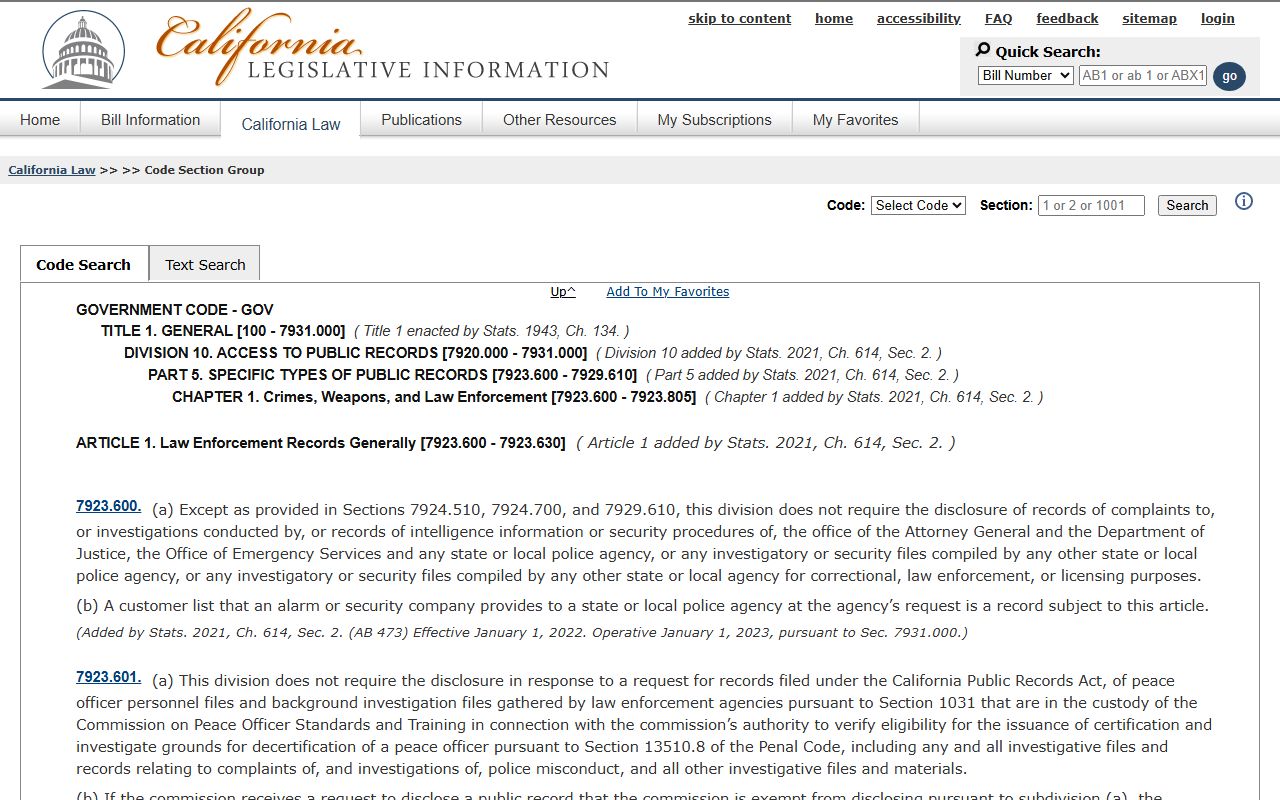
The official statute text on California Legislative Information sets the legal floor for public access to county and state agency records.
Note: A public record can still require a copy fee, ID, an in-person visit, or clerk processing time before you receive it.
Records That Are Sealed or Confidential in Sacramento County
California closes some court files by law. Juvenile delinquency and dependency files are sealed under Welfare and Institutions Code section 827. Access is limited to parties, attorneys, and others named in the statute. Juvenile records can also be sealed under Welfare and Institutions Code section 781. After sealing, the file is treated as if it never happened, with narrow exceptions.
Adoption records are confidential under Family Code section 9200. Mental health treatment records are protected by Welfare and Institutions Code section 5328. Adult arrest records can be sealed under Penal Code section 851.91 when an arrest did not lead to conviction. A petition to view a sealed record usually goes to the court that handled the case. The petition may need notice to the prosecutor and a judge's order.
The portal will not show a sealed case at all. A no-result search does not always mean no case. It can mean the case was sealed, filed under a different name, in a different court, or simply not yet processed by the clerk.
In-Person Court Record Requests
An in-person visit is sometimes needed. Older paper files, certified copies, exemplified copies, and sealed-record motions usually require a clerk visit at the right courthouse. The main address is below. The Clerk of the Superior Court runs intake at this site for many criminal and civil cases. Family law goes to the Ridgeway courthouse. Traffic goes to Carol Miller. Juvenile goes to the Juvenile Courthouse.
Bring a photo ID, the exact case number, and payment for the copy or certification fee. Plain copies, certified copies, and exemplified copies all cost different amounts. Older files may have to be pulled from archive storage, which adds time. Ask the Sacramento Superior Court Clerk's Office whether the document image is available online before making the trip.
Copy and Certification Fees
Copy and certification fees are set by Sacramento Superior Court and statewide schedules. The court's fee page is the source of truth. Plain copies have one rate. Certified copies cost more. Exemplified copies, sometimes called triple-seal or authenticated copies, cost the most. They are used for out-of-state and many immigration matters. Use the Sacramento Superior Court forms page for the right copy request form before going to the clerk's window.
Plain photocopies and screenshots are not certified. A court, agency, or other office that asks for a certified copy will not accept a screenshot. Ask the receiving agency what level of certification is required before you order. Ordering the wrong copy means more fees and another trip.